Archives: Articles
-

A History of Early Microcontrollers, Part 6: The Fairchild F8 and Mostek MK3870
If Shakespeare were a technology fiction writer, he likely would have come up with something that looked very much like the story of the Fairchild…
-
How to Build a Multi-Billion-Transistor SoC
As I’ve been known to note, one of the great things about being me—in addition to being outrageously handsome, a trendsetter, and a leader of…
-

A History of Early Microcontrollers, Part 5: The Motorola 6801
Motorola’s Semiconductors Components Group – Motorola Semiconductor – was late to the microprocessor party in more ways than one. The company never developed a successful…
-
A History of Early Microcontrollers, Part 4: The Intel 8048 and 8748
Intel announced the first commercially successful microprocessor, the 4004, in late 1971. By 1974 Intel had introduced four microprocessors: the 4-bit, “low-end” 4004 and the…
-
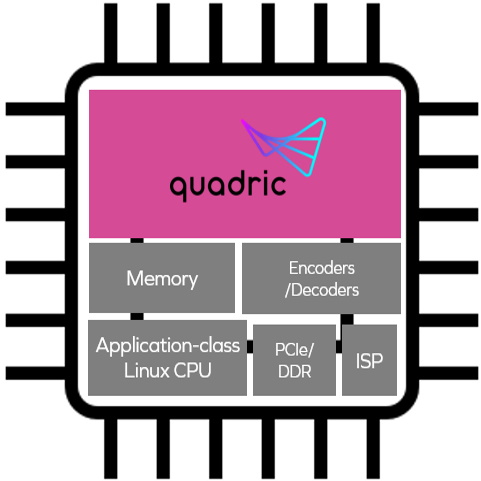
Chimera GPNPU Blends CPU, DSP, and NPU into New Category of Hybrid Processor
According to Greek mythology, the Chimera (a.k.a. Chimaera) was a monstrous fire-breathing hybrid creature that was composed of different animal parts. These days, the term…
-

Virtualized IoT Devices in the Cloud Run Faster Than Their Real-World Counterparts!
I’m not a giddy software guru. I’m a hard-bitten hardware guy. I remember those days of yesteryear when I hadn’t even heard about esoteric things…
-
A History of Early Microcontrollers, Part 3: The Rockwell Microelectronics PPS-4/1
Now that we’re well into the 21st century, most people rarely think of Rockwell Microelectronics in connection with microprocessors and microcontrollers. The parent company, North…
-

A History of Early Microcontrollers, Part 2: The Texas instruments TMS1000
As with many first-of-a-kind devices, the Texas Instruments (TI) TMS0100 calculator chip family was a narrowly defined microcontroller, mostly good for making calculators. However, the…
-

Are You Ready for PCIe 6.0?
I don’t know about you, but I’m starting to feel a little frazzled around the edges, as it were. Things are now progressing so fast…
-
What Can One Do with an Array of 250,000 Ultrasonic Transducers?
I am obliged to admit that I’ve not spent as much time as perhaps I should, cogitating and ruminating over what I could do with…